
Extreme noise
Gas powered leaf blowers create high-intensity, low-frequency noise that impacts nearby homes, schools and parks, and disturbs wildlife. Operating a gas leaf blower can cause permanent hearing loss in 2 hours and can impact 90 nearby homes. The low-frequency noise of gas blowers travels further than the noise from electric blowers and penetrates through windows more readily. Gas blowers create much more noise impact than electric blowers.
Health risks
Emissions from gas leaf blowers create high levels of formaldehyde, benzene, fine particulate matter and smog forming chemicals, which are known to cause dizziness, headaches, asthma attacks, heart and lung disease, cancer and/or dementia.
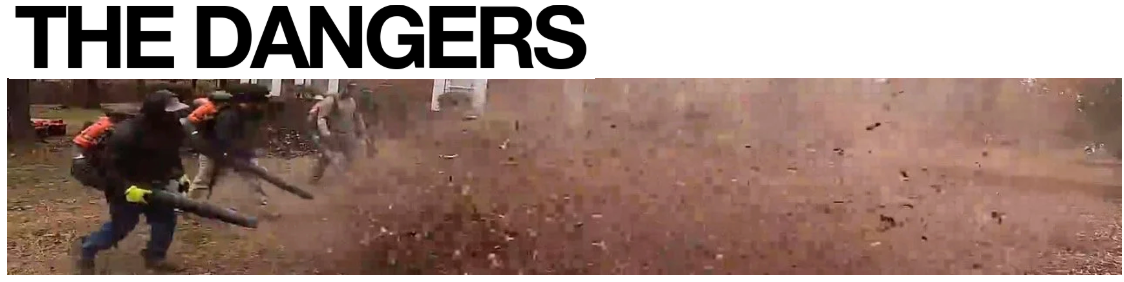
Blowers also kick up unhealthy clouds of dust and debris that can include pollens, animal feces, fertilizers, pesticides, lead, asbestos, fine particulate matter, and more. Inhaling these substances in large quantities and with such velocity can have serious and insidious health consequences.
Environmental hazards
Spills from re-fueling leaf blowers contaminate soils and waterways. Maintenance of gas-powered leaf blowers produces toxic waste, including discarded fuel filters and contaminated air filters. Blowers erode and compact soil and harm plants, microorganisms and pollinators.
In addition to smog-forming emissions and toxic fumes, gas powered leaf blowers create CO2 emissions that contribute to the climate crisis.
Workers at risk
Operators of the equipment are most at risk from the noise and localized pollution, but the exhaust and dust is a danger to the general population – especially children, the elderly, people with chronic asthma and people exercising. Gas blowers are often used in parks and public spaces where many people are exposed to the dangers.
Thanks fo Quiet Clean PDX for allowing us to adapt their DANGERS page to fit our Lower Merion campaign.
DOCTORS WITHOUT BLOWERS Three Lower Merion physicians attest to the multi-faceted health crisis that gas leaf blowers have wrought — and advocate persuasively for a year-round ban.
THIS INVISIBLE POPULATION
In the video below, a Massachusetts minister testifies before the Select Board in the town of Acton near Boston about the difficult position of immigrant landscaping workers.